
TL;DR:
n8n automation is generally cheaper and more flexible than Zapier for high-volume workflows, but both tools start to strain once data volumes, security requirements, and AI-driven logic scale up. Cloud-based MCP servers solve this by giving AI models a secure, standardised way to reach live business data, without the rigid rules or per-task billing that limit traditional automation platforms.
Daftar isi
Automation used to mean picking a tool, connecting a few apps, and letting simple “if this, then that” logic run in the background. For years, Zapier owned that space, and more recently n8n automation has taken a large share of teams away from it thanks to lower costs and greater flexibility.
But data volumes have changed the game. When a business is routing millions of records, orders, or messages a month, the tool doing the routing needs to be fast, secure, and predictable. This is where n8n automation and Zapier both start to show their limits, and where a newer approach, the MCP server, is quietly becoming the more sensible long-term choice.
This article compares n8n automation with Zapier for high-volume data routing, then explains why cloud-based MCP servers are emerging as the more secure, scalable alternative for growing businesses.
What Is n8n Automation and Why Do Teams Choose It Over Zapier?
n8n automation refers to workflows built on n8n’s open-source platform, which connects apps, APIs, and internal tools using visual “nodes.” Teams choose it over Zapier mainly because it bills by workflow execution rather than by task, which can cut automation costs by 80 to 90 percent at scale.
How Does n8n’s Execution Model Differ From Zapier’s Task-Based Pricing?
n8n counts one workflow run as a single execution, no matter how many steps are inside it. Zapier counts every individual action as a separate task. For a workflow with eight steps run 10,000 times a month, that is 10,000 n8n executions versus 80,000 Zapier tasks for the same output.
What Are the Real Cost Differences at Scale?
Independent comparisons put a typical order-routing workflow at around $300 or more per month on Zapier’s Team plan, against roughly $50 a month on n8n’s Pro plan, or as little as $10 a month self-hosted (Tech Insider, 2026; Hatchworks, 2026). At enterprise volumes, that gap only widens.
Where Do Zapier and n8n Start to Break Down at High Volume?
Both platforms can technically process high volumes, but neither was built for AI-native, high-frequency data routing. Zapier’s task-based billing becomes unpredictable at scale, while n8n’s execution model, though cheaper, still relies on manual rule-building that cannot interpret context the way an AI model can.
What Happens When Data Volumes Spike Unexpectedly?
A smart home company processing millions of IoT webhook events a day would find Zapier’s per-task pricing prohibitively expensive very quickly. n8n handles this more affordably by billing per execution, but the workflow logic itself still needs to be manually maintained as conditions change, which becomes harder as event volume and variety grow.
Why Do Security and Compliance Teams Get Nervous?
Zapier is cloud-only, meaning all data passes through its US-based servers, which can complicate GDPR and data sovereignty requirements for UK and EU businesses. n8n can be self-hosted for tighter control, but that shifts full responsibility for infrastructure, patching, and uptime onto your own team.
What Is an MCP Server and How Does It Solve These Problems?
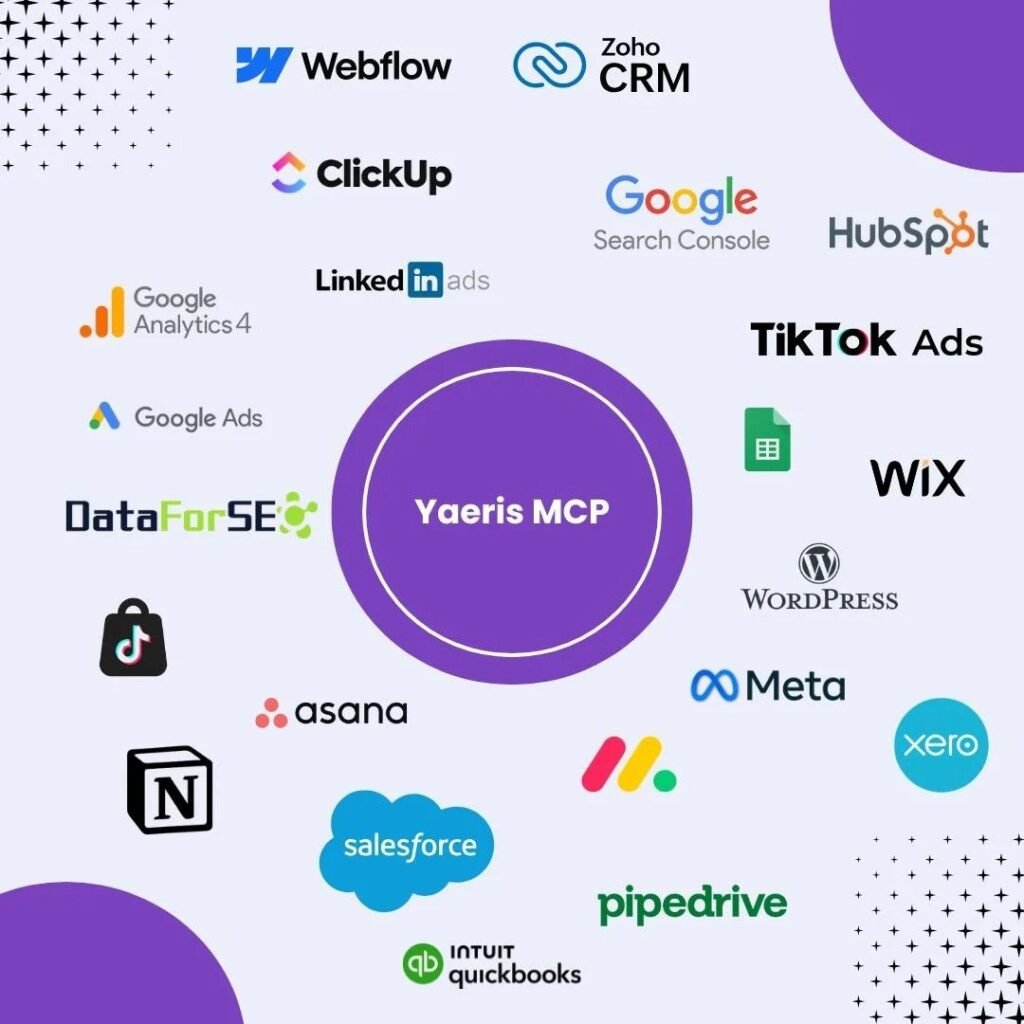
Sebuah MCP server, built on the Model Context Protocol, acts as a secure bridge between an AI model like Claude and your live business systems. Instead of fixed automation rules, the AI reasons over real-time data pulled through the MCP server, making routing decisions dynamically rather than following a rigid script.
How Is an MCP Server Different From a Traditional Automation Tool?
Traditional platforms like Zapier and typical n8n automation setups run on trigger-based logic: if X happens, do Y. An MCP server instead exposes your tools and data to an AI model through one standardised connection, letting the AI interpret context, handle exceptions, and make judgement calls that rigid rules cannot.
Why Are Businesses Moving to Hosted MCP Servers Instead of Self-Hosting?
Self-hosting an MCP server demands developer time, security hardening, and ongoing maintenance. A hosted MCP server removes that burden entirely. Providers handle uptime, encryption, identity propagation, and tool-level access controls, so teams get enterprise-grade security without building or maintaining infrastructure themselves.
What Does the Data Say About MCP Adoption in 2026?
Adoption of MCP has accelerated sharply through 2025 and into 2026, driven largely by the security and reliability gaps left by trigger-based tools. Stacklok’s 2026 industry report found that 41 percent of surveyed software organisations already have MCP servers in limited or broad production use, with fintech leading sector adoption at 45 percent (Stacklok, 2026).
Authentication was previously the single biggest blocker to enterprise MCP rollouts. That changed in 2026, when a standardised enterprise auth layer covering OAuth, role-based access control, and audit logging was introduced, unblocking most Fortune 500 deployments that had previously stalled (Digital Applied, 2026).
How Do You Move From n8n or Zapier to a Secure MCP Setup?
Moving from n8n automation or Zapier to an MCP-based setup does not mean ripping out your existing stack overnight. Most businesses connect their current tools through a hosted MCP endpoint first, then gradually shift AI-driven decision-making away from rigid trigger rules as confidence in the new setup grows.
What Should You Look for in a Cloud-Based MCP Provider?
Look for multi-tenant isolation so client data never crosses accounts, encrypted credential management, granular tool-level permissions, and transparent usage-based pricing rather than a flat fee regardless of volume. These features matter far more once you are routing sensitive or high-frequency data than they do for a handful of simple workflows.
Kesimpulan
n8n automation is the more cost-efficient choice over Zapier for most growing businesses, and the data backs that up clearly. But cost efficiency alone does not solve the security, scalability, and context problems that come with genuinely high-volume data routing. That is where cloud-based MCP servers earn their place, giving AI models secure, real-time access to your business data without rigid rules or runaway task-based bills.
If your team is outgrowing Zapier or hitting the limits of manual n8n automation workflows, it is worth exploring how a secure MCP server could support your next stage of growth. Speak to our team about our Layanan otomatisasi AI or explore our hosted MCP server to see how a smarter, AI-driven layer could replace the rigid rules holding your automation back.
Pertanyaan yang Sering Diajukan (FAQ)
n8n automation is commonly used to connect apps and APIs for tasks such as routing form submissions, syncing CRM records, generating reports, and orchestrating multi-step workflows. Its node-based builder and support for custom code make it popular for both simple integrations and complex, logic-heavy processes.
For most high-volume workflows, yes. n8n bills by workflow execution rather than by individual task, which typically works out 80 to 90 percent cheaper than Zapier’s per-task pricing once workflows involve several steps run frequently.
n8n can handle high volumes more affordably than Zapier, particularly when self-hosted, since there are no per-task charges. However, workflow logic still needs manual upkeep as conditions change, which becomes harder to manage as complexity and volume grow.
Self-hosted n8n generally offers stronger data control, since information never leaves your own infrastructure, which helps with GDPR and other compliance requirements. Zapier is cloud-only, so all data passes through its servers, which can be a concern for organisations with strict data sovereignty needs.
An MCP server is a secure bridge that lets AI models access your live business data and tools in real time. You are likely to benefit from one if you are already using AI agents or Claude-style tools and want them to act on current data rather than static, manually entered information.
Referensi
- Hatchworks (2026). n8n vs Zapier: The Definitive 2026 Automation Face-Off. https://hatchworks.com/blog/ai-agents/n8n-vs-zapier/
- Tech Insider (2026). n8n vs Zapier 2026: 90% Cost Gap and 400 vs 7,000 Integrations. https://tech-insider.org/n8n-vs-zapier-2026/
- Layer3Labs (2026). Zapier vs n8n 2026: Pricing, AI Nodes & TCO Compared. https://www.layer3labs.io/comparisons/zapier-vs-n8n
- Stacklok (2026), as reported in Digital Applied. MCP Adoption Statistics 2026: Model Context Protocol. https://www.digitalapplied.com/blog/mcp-adoption-statistics-2026-model-context-protocol
- Digital Applied (2026). MCP Hits 97M Downloads: Model Context Protocol Guide. https://www.digitalapplied.com/blog/mcp-97-million-downloads-model-context-protocol-mainstream